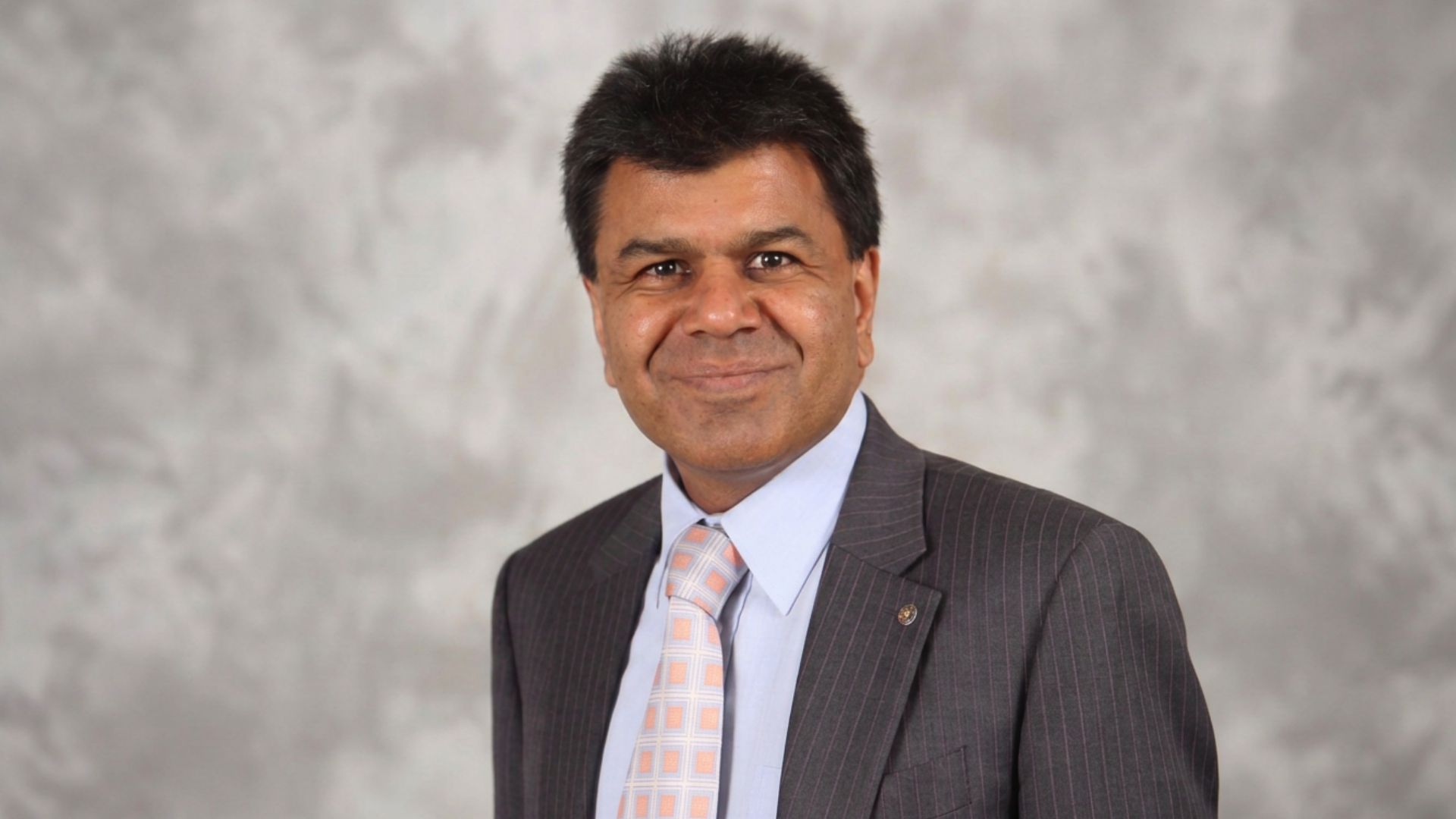
HDN held a roundtable in Newcastle in June, exploring the theme of inclusive leadership and governance.
We reproduce in full a speech by Nitin Shukla, which reflects on both his personal experiences and professional practice in diversity an inclusion. It explores the importance of inclusive leadership, strong partnerships, and community engagement in building fairer, more connected societies. Nitin challenges organisations to move beyond intention and into action — placing people, power and purpose at the heart of governance and decision-making.
Before I speak about today’s theme, I want to begin with a moment I will never forget. I was walking through the Graingrr Market in Newcastle on an ordinary day. And out of nowhere, an older man looked straight at me and said: ‘Go back to where you came from. I didn’t fight in the war for people like you to come to this country.’
Just like that. And in that moment, everything stopped. Because those words were not just rude. They carried a message you do not belong. And when someone says that to you, it hits deep. It makes you question your place, your identity, your right to be there. I could have walked away bitter. But I made a different choice. I decided that if prejudice like that still exists so openly, then I had a responsibility to do something about it. To be in spaces where I could influence change. To challenge exclusion. And to help build a fairer, more inclusive society. Because this is not just about one moment. It reflects a wider reality that many people still live with.
And that is why today’s theme matters so much.
When we talk about People, Power, Purpose, we are really talking about belonging, fairness and who gets to shape the communities we live in.
Let me start with partnership working. Because no organisation can do this alone. The challenges we face – hate incidents, community tensions- do not sit neatly in one place. They cut across housing, policing, local government, health and the voluntary sector. And I have seen time and again that the difference between escalation and resolution is the strength of those partnerships.
In one community I worked with, misinformation on social media began to fuel tensions. Anxiety grew. Trust started to weaken. What made the difference was a coordinated response. Housing providers worked closely with police, community leaders and local organisations. Information was shared quickly. Messages were consistent. And crucially, trusted voices from within the community were part of the response. That only works when relationships are built before the crisis. Partnerships formed in calm times are what carry you through difficult ones.
Secondly, supporting staff. Because your staff are the ones dealing with this reality every day. They are having difficult conversations. They are balancing enforcement with empathy. They are managing risk while while trying to maintain trust. That is hard work. And we should be honest about that.
So staff need three things:
Clarity – clear frameworks that help them make fair, consistent decisions.
Confidence- training and skills to manage tension and conflict.
And care – because this work takes a toll.
Supporting staff wellbeing is not optional- it is essential. If we want strong communities, we need supported staff.
Thirdly, resident voice.
We talk about it often. But the real question is: do we act on it? Listening is not just about consultation. It is about influence. It is about shifting power. So residents are not just heard – they are shaping decisions.
In one community, residents said they felt unsafe. Not necessarily because of crime but because of tensions and poor communication. The response was not just enforcement. It was engagement. Creating space for dialogue. Supporting community-led solutions. Improving communication. And the result was not just fewer issues. It was stronger trust. Because when people feel heard, they feel they belong.
And that brings me to leadership and governance. Because this is where it all comes together. And housing sits right at the centre of that. Housing is not just about bricks and mortar. It is about people, safety, trust and belonging. It is where cohesion is strengthened- or where it can begin to break down. It is often where tensions surface first. Where antisocial behaviour appears. Where vulnerability becomes visible. That is why housing providers are not just service deliverers. You are anchor institutions. You are on the frontline of building safe, strong, inclusive communities. And you are doing that work in an environment that is becoming more complex by the day. We are seeing rising polarisation, misinformation, hate and tension. These issues are not just distant. They are felt locally- by residents, by staff and across services.
So today I want to focus on three things:
Partnership working
Supporting staff to manage complexity and risk
And listening to – and acting on – residents voice.
And running through all of this is one central message: leadership and governance matter. Not in theory -in practice. Because if we are serious about People, Power and Purpose, then we must be serious about who holds power – and how it is used.
Inclusive governance is not about statements. It is about decisions. Who is in the room. Whose voices are heard. And whether leadership is prepared to act.
Let me give you three examples.
Firstly representation.
At the Office of the Police and Crime Commissioner for Northumbria, we recognised that Northumbria Police did not fully reflect the communities it served. And that matters. Because when people do not see themselves in institutions, trust is harder to build. We developed a positive action programme focused on mentoring and coaching people from underrepresented backgrounds. It was practical, structured and sustained. Over two and a half years, it led to around 90 new officers from diverse backgrounds. That is what happens when leadership takes responsibility and governance drives action.
Secondly, lived experience.
At the OPCC for Northumbria, we established a Police Powers Advisory Panel made up of people with lived experience of stop and search. That was not comfortable. It meant hearing difficult truths. It meant challenge. It meant sharing power. But it worked. It brought lived experience into decision making and contributed to a measurable reduction in disparity. Not as a gesture- but as a driver of change.
And thirdly, governance that reflects community. In my work with Connected Voice, as trustees we asked ourselves a difficult question. Do we really reflect the communities we serve. And the honest answer was not fully. So we acted. We carried out targeted outreach to recruit trustees from more diverse and underrepresented backgrounds. We widened the pool. We removed barriers. And we prioritised lived experience. Because governance is not just about oversight. It is about perspective. Insight. And better decision making. And we saw a shift. Different questions. Different priorities. Stronger connections to the community. That is what inclusive governance looks like in practice.
So when we talk about equality, diversity and inclusion, we have to be clear. It is not just about policy. It is about how decisions are made. Accountability. Consistency. And the the courage to act. Because in moments of tension, people look to leadership. For fairness. For clarity. For reassurance.
And when leadership is inclusive and values driven, it does more than manage problems. It changes outcomes.
Let me finish with this. Housing sits at the heart of our communities. You see the challenges early. You feel the tension first. And you have the power to bring people together. That is People.
You make decisions that shape lives and communities. That is Power.
And you have the responsibility – and the opportunity to build places where everyone feels safe, valued and that they belong. That is Purpose.
When those come together, under strong leadership and inclusive governance. It is transformational.
And in the world we are living in today, that has never mattered more,
Thank you.
About Nitin Shukla :
Nitin Shukla retired in early 2026 after a 40-year career in the public sector, where he spent the last 25 years championing equality, diversity, inclusion and racial justice. His work has always centred on bringing people together and building communities where everyone feels safe, heard and valued. Today, Nitin continues this commitment through a variety of voluntary roles – as Lay Member of Council of Newcastle University, Governor of both primary and secondary schools and Non-Executive member with a housing organisation and St Nicholas Cathedral. He is also a member of the planning group of the North East Anti-Racism Coalition. Nitin remains passionate about inclusive governance and the power of collaboration to create fairer, more connected communities.

Would you like to speak to a member of our team?
Just submit your details and we will be in touch shortly.
Fields marked with an * are required