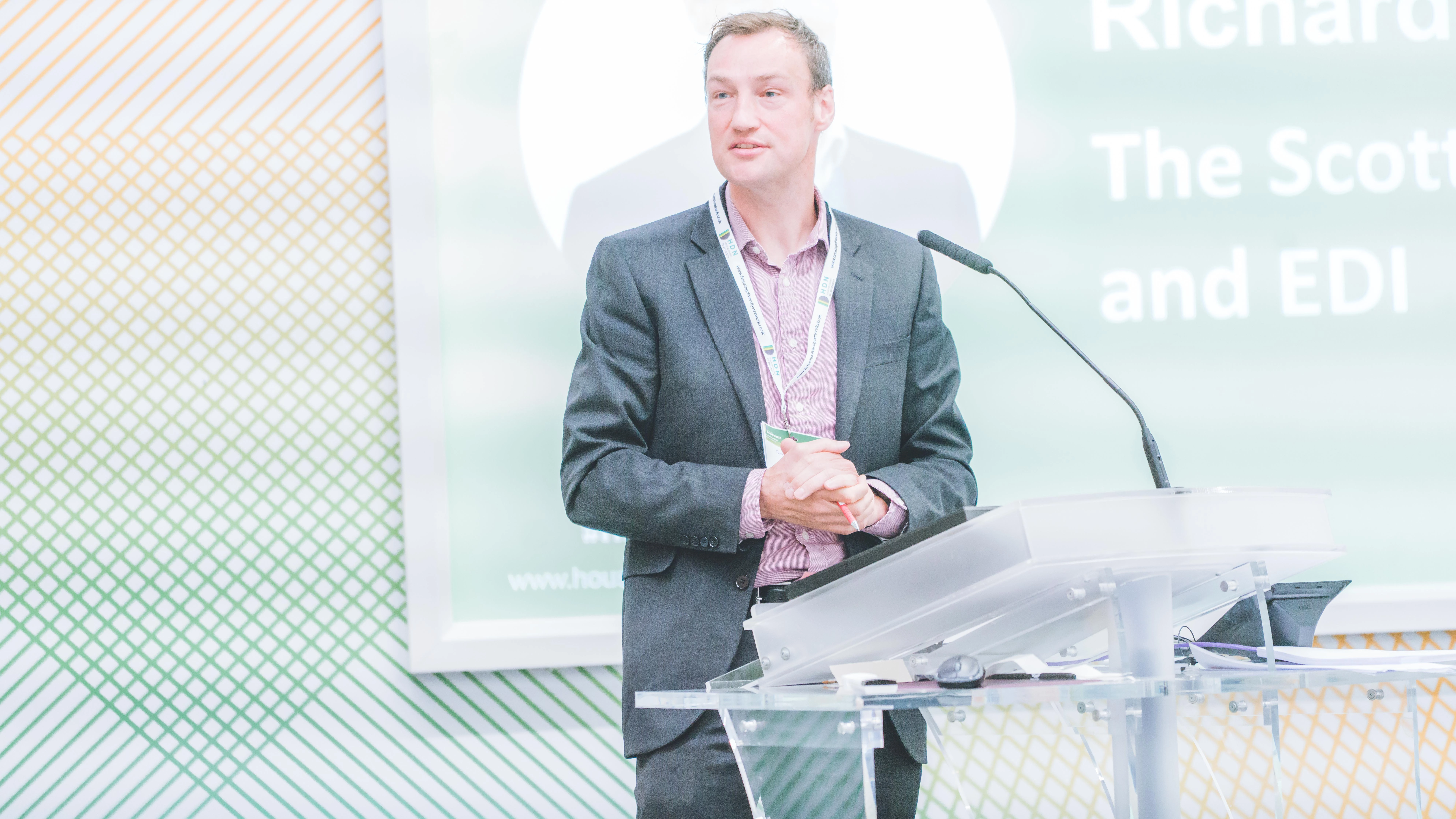
At HDN’s Scottish Equalities Conference, Richard Meade, Chief Executive of the Scottish Federation of Housing Associations (SFHA), reflected on the role housing associations can play in creating more inclusive organisations and communities.
Having joined SFHA just over a year ago, Richard spoke about his experience visiting housing associations and co-operatives across Scotland. He highlighted the sector’s commitment to delivering a healthier, wealthier and fairer Scotland through safe, warm and affordable homes.
More than 1.2 million people across Scotland live in social housing. Richard said housing organisations should reflect the communities they serve, recognising differences in race, nationality, sexuality, religion, age and ability.
For Richard, EDI needs to be part of everyday organisational culture. This means creating spaces where people feel able to share their views and where those views can influence decisions.
Richard also reflected on the challenges facing EDI work across Scotland.
He pointed to increasing discrimination against some communities, alongside misinformation and rhetoric that can fuel division. Housing associations can be affected by these issues too.
He highlighted recent misinformation in Glasgow around the allocation of social housing. This has affected housing associations and communities, reinforcing the need for organisations to support tenants when they face misinformation, threats or abuse.
Richard said this makes continued EDI work particularly important. He also encouraged housing organisations to consider how equality should shape their response to wider changes across public services.
The Scottish Government has set out an ambitious programme of public service reform. Richard argued that housing needs to be part of those discussions from the beginning.
Housing associations often see the consequences when other services become difficult to access. In some communities, their offices are among the few remaining places where residents can speak directly to someone who understands the local area.
Richard said reform should consider how people experience services in practice. A service may appear straightforward on paper but remain difficult to access for someone who cannot travel easily, access digital services or understand the information provided.
Housing also affects people differently. Delayed adaptations can affect disabled residents. A shortage of affordable homes can affect younger people trying to establish a home. Poverty, discrimination and isolation can also overlap.
He encouraged organisations to ask whether public service reform will reduce inequalities, provide support earlier and give people greater choice and control.
That means involving tenants and communities in decisions. Consultation needs to include showing how people’s views have influenced what happens next.
Richard said housing associations are well placed to contribute. Their local knowledge and relationships with tenants can help identify where gaps between services affect people’s daily lives.
Board recruitment is another area where Richard sees an opportunity for housing associations to strengthen EDI.
Housing organisations in Scotland are reporting increasing difficulty recruiting new Board Members. Richard said this raises questions about how organisations can widen participation while meeting the growing responsibilities placed on Boards.
Board Members now need to understand areas including legislation, regulation and financial responsibilities. Richard acknowledged that these expectations can create barriers for some people.
He also highlighted the value of bringing different experiences and perspectives into governance.
SFHA has introduced its On Board platform, connecting people interested in becoming Board Members with housing associations that have vacancies. Its Routes to Housing programme also focuses on bringing more young people into the sector.
SFHA’s EDI network, run in collaboration with Housing Diversity Network, provides another space for housing professionals to share experiences and continue the conversation.
Richard closed by encouraging people across the sector to get involved and contribute their voices to Scotland’s housing conversation.

Would you like to speak to a member of our team?
Just submit your details and we will be in touch shortly.
Fields marked with an * are required